Entry 20 / Objects of the afterlife
Canopic jars
Four guardians. One carefully protected body.
Canopic jars were containers associated with the preservation and protection of organs removed during mummification. The four sons of Horus guarded the liver, lungs, stomach and intestines. The familiar human, baboon, jackal and falcon lids became common from the New Kingdom, but earlier and later practices varied.
Take a closer look ↓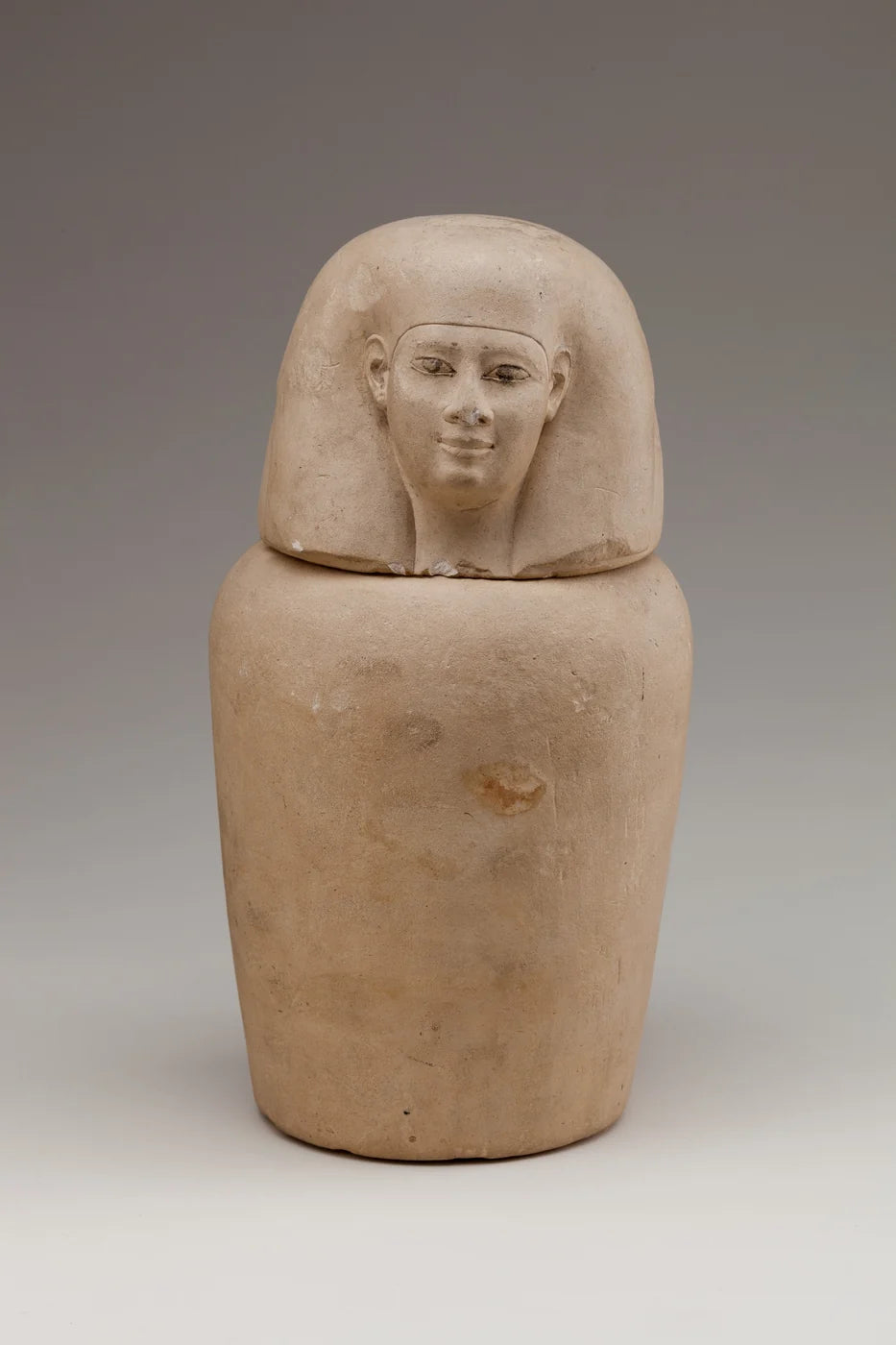
Written in signs
Name & hieroglyphs
- Transliteration
- qby-n-wt
- Familiar names & readings
- Canopic — a later scholarly name
The modern term “canopic” has no ancient hieroglyphic spelling. The Egyptian expression is given in transliteration.
Canopic is a later scholarly label, not the ancient Egyptian name of these funerary vessels. Early researchers mistakenly connected them with vessel-shaped images associated with Canopus, whose name was linked with the Greek figure Kanopos.
An Egyptian expression recorded in the dictionary is qby-n-wt, translated as “canopic jars.” Because canopic itself is a later word, there is no ancient hieroglyphic spelling of that English label to reproduce. Inscriptions on the actual jars name their owners and protective deities, providing a more reliable way to read the objects.
01 / The story
What were canopic jars used for?
Preserving the body involved more than its outward appearance. Certain internal organs could be treated separately and placed under divine protection. Canopic containers formed one part of that wider preparation for the afterlife.
The familiar set of four differently headed jars is a useful introduction, but it is not a timeless formula. Some sets have human-headed lids throughout, and containers, treatments and arrangements changed. A date and an original burial context help explain the particular example.
02 / The story
Which guardian protected which organ?
Imseti, usually human-headed, guarded the liver. Hapy, baboon-headed, guarded the lungs. Duamutef, jackal-headed, guarded the stomach. Qebehsenuef, falcon-headed, guarded the intestines. These are the four sons of Horus, not simply four interchangeable versions of Horus himself.
The illustrated jar has a human-headed lid and is identified by the museum with Imseti’s protection. Its painted limestone and inscription turn a container into a named, purposeful object. The other jars of the set completed the protective group.
| Guardian | Head | Organ |
|---|---|---|
| Imseti | Human | Liver |
| Hapy | Baboon | Lungs |
| Duamutef | Jackal | Stomach |
| Qebehsenuef | Falcon | Intestines |
Train your eye
Three details to notice.
The lid’s head
Use the human, baboon, jackal or falcon head to begin identifying a guardian in later sets.
An inscribed body
Text may name the deceased and the protective deity, making identification much more secure.
The set and its date
A jar’s companions and period are valuable evidence; a single lid does not tell the whole history.
A little more understanding
Good questions.
Clear answers.
Did canopic jars contain the brain?
The conventional four protected the liver, lungs, stomach and intestines. The brain was not one of those four organs.
Did every jar have an animal head?
No. Human-headed sets also occur, especially earlier. The familiar four different heads became common from the New Kingdom.
Are canopic jars statues of gods?
They are primarily funerary containers. Their lids and inscriptions connect them with protective deities, giving practical storage a religious meaning.
Where does the word canopic come from?
It is a later scholarly name arising from a mistaken connection with vessel-shaped images associated with Canopus. It is not the ancient Egyptian name of the jars.
What organs did the four jars protect?
In the familiar arrangement they protected the liver, lungs, stomach and intestines. Each was associated with one of the four sons of Horus.
Who are the four sons of Horus?
Imsety, Hapy, Duamutef and Qebehsenuef are the protective deities associated with the four organs. Their familiar heads are human, baboon, jackal and falcon respectively.
Was the heart placed in a canopic jar?
It was normally retained in the body because of its importance in identity and judgment. It was not one of the four organs assigned to the standard set.
What do the hieroglyphs on canopic jars say?
They often identify the owner and the protective deities and include protective formulas. A translation must follow the inscription on the individual jar; there is no single text shared by every example.
From the library to your home
Keep the story close.
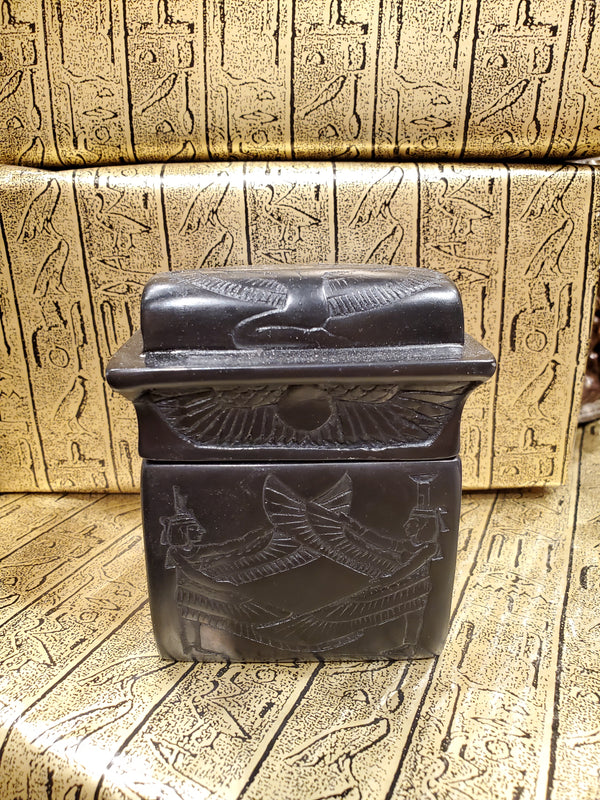
Explore pieces in our shop connected with this subject. The museum objects above are historical references; shop items have their own materials and descriptions.
Explore the Canopic jars collection

Follow the connections
There’s more to this story.


The evidence behind the entry
Bibliography & image credits
Museum records, language references and published research used for this entry. Name spellings and interpretations are documented here alongside the historical sources.
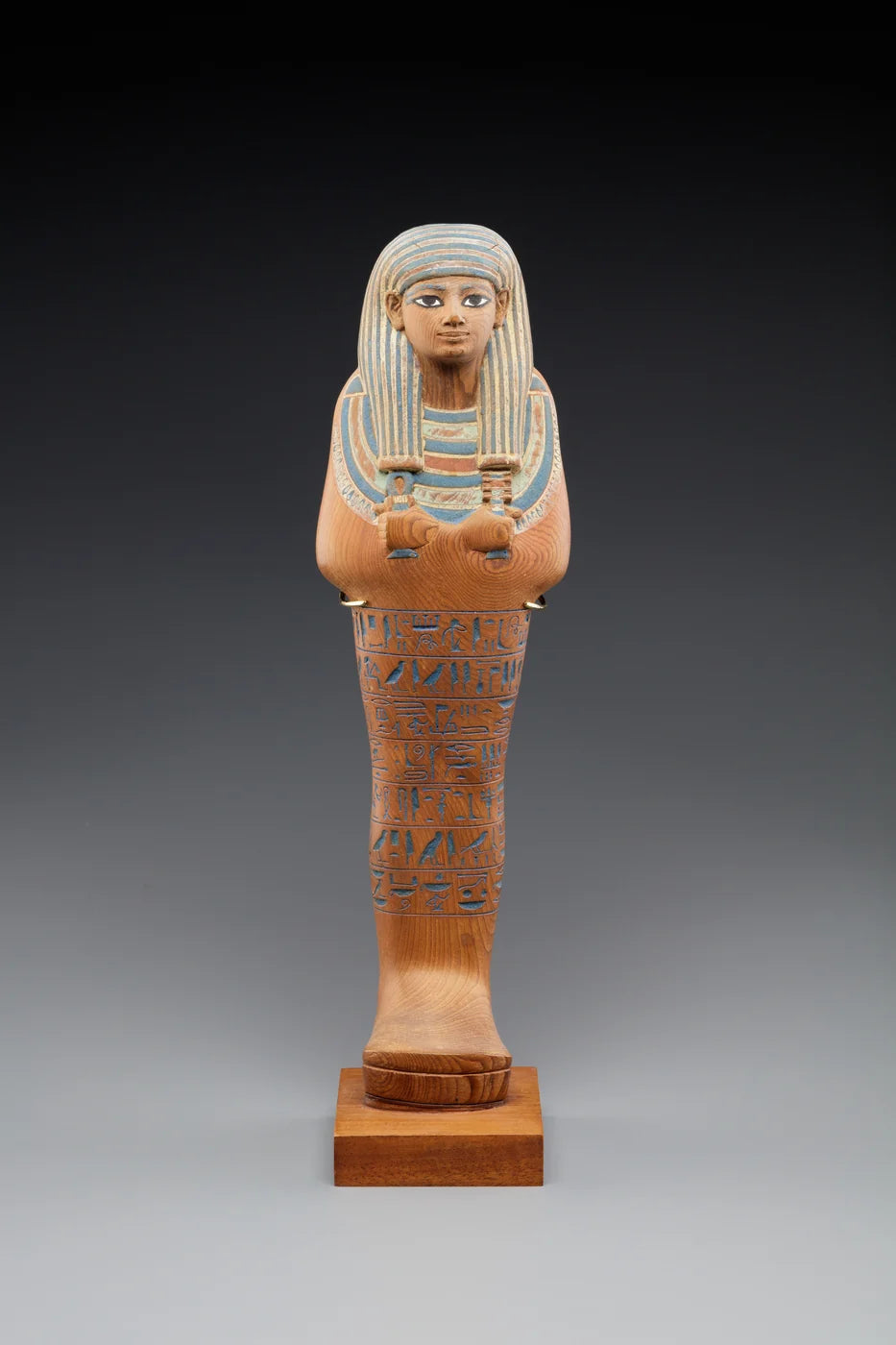
- The Met — Canopic jar with human-headed lid, 12.183.1a
- The Met — An artisan’s tomb in New Kingdom Egypt
- Smithsonian — Egyptian mummies and preparation for burial
- Thesaurus Linguae Aegyptiae — qby-n-wt, lemma 160160 (accessed 20 October 2026)
- The Met — Recent Acquisitions 2004–2005, “Canopic Jar of Minnose”
Photograph: Canopic Jar, The Metropolitan Museum of Art, 12.183.1a.1, .2. Gift of J. Pierpont Morgan, 1912. CC0 / Public domain. Resized for display; the complete photograph is preserved.