Entry 06 / Gods & goddesses
Anubis
A watchful guardian at the threshold.
Anubis was a protector of burial places and the dead, closely associated with embalming and mummification. Usually shown as a black canine or a canine-headed man, he also attends the weighing of the heart in judgment scenes. He is a guardian and ritual specialist, not simply a villainous ‘god of death’.
Take a closer look ↓
Written in signs
Name & hieroglyphs
- Transliteration
- Jnpw
- Familiar names & readings
- Inpu / Anpu / Anubis
One documented spelling, shown in a simple left-to-right line. Ancient spellings and the arrangement of signs varied. Transliteration records consonants; familiar readings supply conventional vowels.
Anubis is the Greek-derived form of Egyptian jnpw, conventionally rendered Inpu or Anpu. In the spelling shown, the reed, water line, stool and quail chick give the consonantal sequence; the reclining canine on a shrine identifies the divine name.
The original meaning of jnpw is uncertain. Suggestions involving a royal child or decay have been proposed, but neither should be presented as an established word-by-word translation. “Lord of the necropolis” describes a role or title, rather than translating the name Anubis itself.
01 / The story
What did Anubis do?
Preparing and protecting the dead was a serious religious responsibility. Anubis belonged to that work: he guarded graves and was associated with the treatment of the body for burial. His presence could express the hope that the deceased would be protected through a vulnerable transition.
In familiar judgment scenes, he checks or tends the balance on which a heart is weighed against the principle of Ma’at. Thoth records the result. The scene gives each deity a distinct role within a larger account of judgment and continued existence.
02 / The story
Why a black canine?
Anubis is often called jackal-headed, although identifying the precise animal behind Egyptian canine deities is more complicated than matching a modern species label. The long muzzle and upright ears are the most useful visual starting points.
Black in this imagery need not mean evil. It could evoke regeneration and Egypt’s fertile soil, as well as the transformed body in burial. Read the colour together with the scene: a figure beside a mummy or a set of scales has a protective and ceremonial context.
Train your eye
Three details to notice.
Erect ears and a long muzzle
A canine profile distinguishes Anubis from the falcon-headed and feline-headed deities.
A recumbent guardian
He may appear as a complete animal lying alert on a shrine or chest.
Funerary surroundings
A mummy, burial equipment or the heart-weighing scene can clarify the figure’s role.
A little more understanding
Good questions.
Clear answers.
Was Anubis evil?
That is a misleading modern reading. His central roles concerned care, preparation and protection of the dead.
Are Anubis and Osiris the same god?
No. Anubis is associated with embalming and protection; Osiris is the ruler of the dead and a central figure of renewal. They can appear together.
Why is Anubis usually black?
Black carried associations with regeneration and fertile earth in Egyptian symbolism. It was not simply a naturalistic coat colour or a sign of evil.
What was Anubis’s Egyptian name?
It is conventionally transliterated jnpw and read Inpu or Anpu. Anubis is the familiar form that comes through Greek.
What does the name Anubis literally mean?
Its original derivation is uncertain. Proposed links with a royal child or decay remain interpretations; titles describing his funerary duties are not literal translations of his name.
What animal represents Anubis?
He is represented by a canine, conventionally called a jackal, either reclining or as the head of a human-bodied god.
What does Anubis do at the weighing of the heart?
In familiar judgment scenes he attends to the scales. Thoth records the result, and Osiris has a different role as ruler of the realm of the dead.
Why is Anubis connected with mummification?
He protects the dead and is closely associated with embalming and care of the body. These duties make him a guardian within funerary belief.
From the library to your home
Keep the story close.
Explore pieces in our shop connected with this subject. The museum objects above are historical references; shop items have their own materials and descriptions.
Explore the Anubis collection


Follow the connections
There’s more to this story.


The evidence behind the entry
Bibliography & image credits
Museum records, language references and published research used for this entry. Name spellings and interpretations are documented here alongside the historical sources.
- Rosicrucian Egyptian Museum — Anubis
- The Met — Anubis
- Thesaurus Linguae Aegyptiae — Jnpw, lemma 27360 (accessed 20 October 2026)
- Sjef Willockx — Three Egyptian Gods: Amentet, Andjeti and Anubis (2007), pp. 39–40
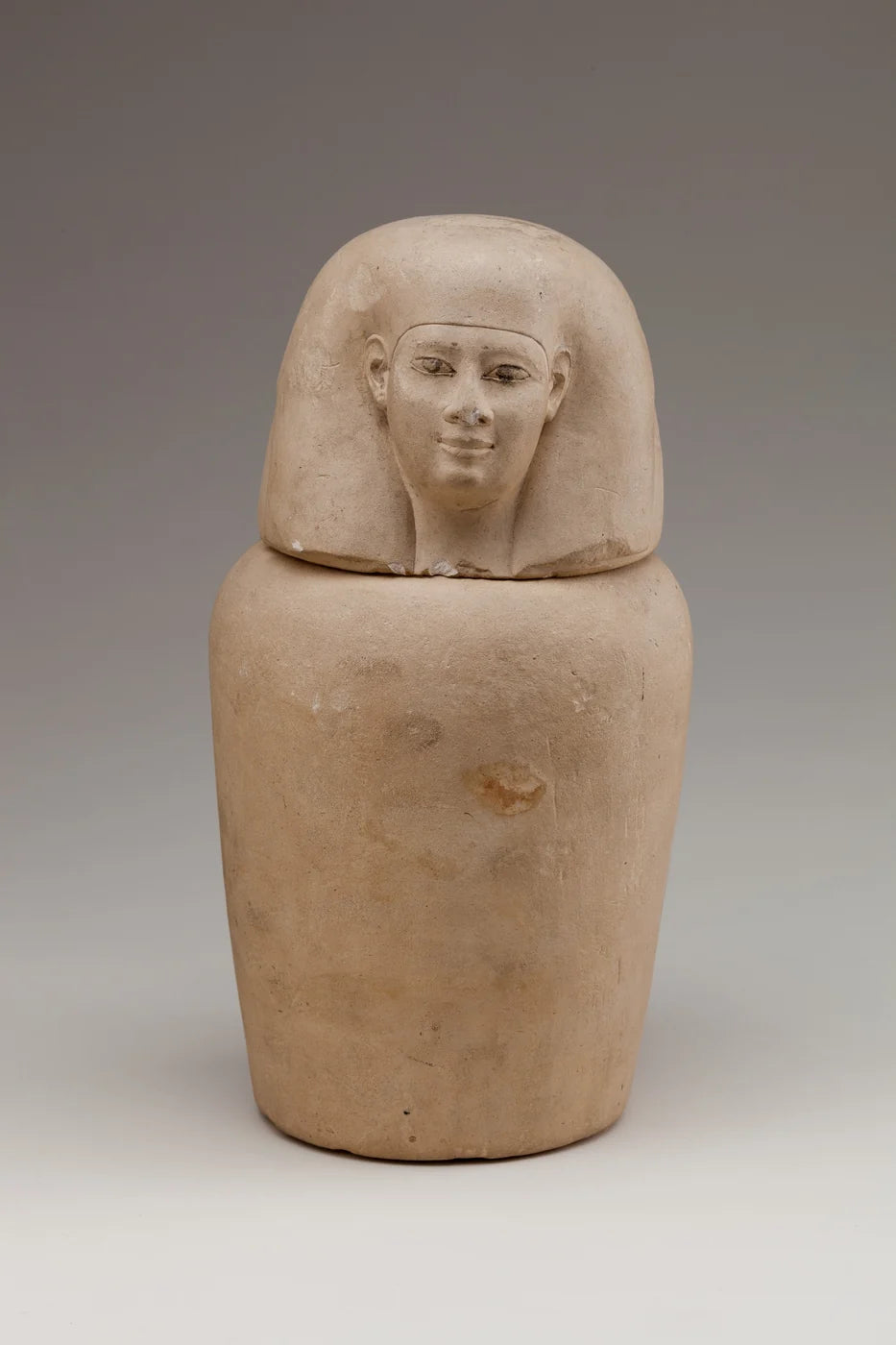
Photograph: Anubis, The Metropolitan Museum of Art, 04.2.427. Gift of Darius Ogden Mills, 1904. CC0 / Public domain. Resized for display; the complete photograph is preserved.